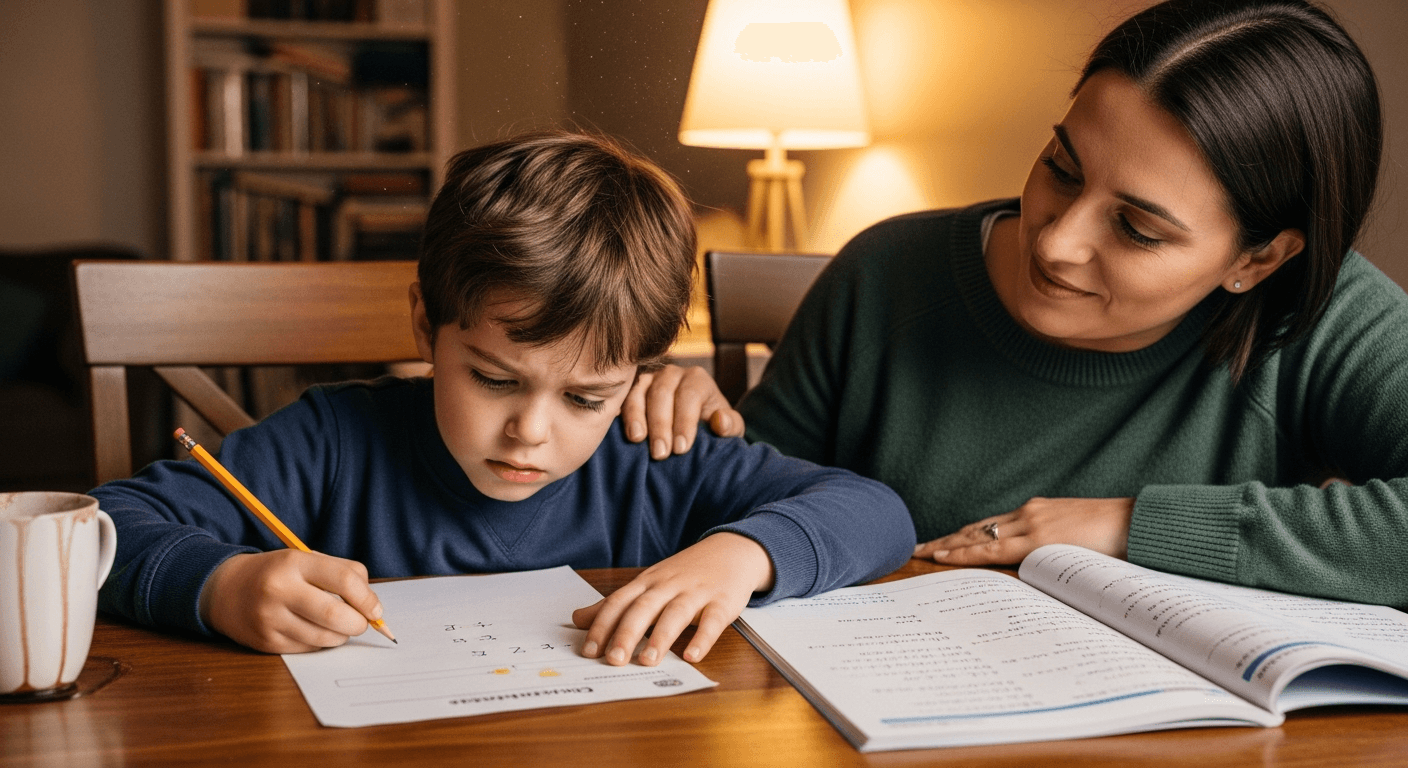
A simple routine that helps you stay involved in your child's learning without hovering — or doing the work for them.
Most homework routines fall into one of two failure modes: total hands-off ("You're old enough to handle this yourself") or total hands-on ("Let me sit here while you work through every problem"). Both produce kids who struggle with academic independence.
There's a better option that takes about five minutes and makes a surprising difference.
The Check-In Method
The homework check-in isn't about reviewing answers. It's a structured five-minute conversation that happens before your child starts their homework. Here's exactly what it looks like:
Minute 1: The Inventory
"What homework do you have tonight?"
Let them list it. Don't check the agenda yourself first. This trains them to own their workload.
Minute 2: The Estimate
"How long do you think each thing will take?"
Kids are famously bad at this — and that's the point. You're training their ability to plan, not quizzing them on the answer.
Minute 3: The Obstacle Scan
"Is there anything you're confused about or think is going to be hard?"
This surfaces problems before they become meltdowns. If they say "the math is really confusing," you can give a two-minute pre-explanation now rather than a 20-minute crisis later.
Minute 4: The Priority
"What are you going to start with?"
Starting with the hardest thing first (when focus is highest) is usually the right answer, but let them reason through it.
Minute 5: The Plan
"Okay — go for it. I'll check in with you in [X] minutes."
And then leave.
Why It Works
The check-in creates what psychologists call "implementation intention" — a clear, specific plan for when and how they're going to complete a task. Research shows that people who form implementation intentions are 2–3x more likely to follow through than those who simply intend to do something.
It also shifts ownership back to your child in a concrete way. You're not tracking them. They're reporting to you.
The Check-In for Different Ages
Elementary (ages 6–10):* Keep it even shorter. Two questions: "What do you have?" and "What are you starting with?" Attention span and planning capacity are still developing.
Middle school (ages 11–13):* Full five-minute check-in, with emphasis on time estimation. This age group notoriously underestimates how long things take.
High school (ages 14+):* The check-in might become two minutes and happen via text or a brief dinner conversation. The structure stays, the formality drops.
The Follow-Up Check-In
About 20–30 minutes in, do a 60-second check: "How's it going? Anything you're stuck on?"
This catches problems early without hovering. If everything is fine, you learn nothing new and they stay on task. If something is wrong, you catch it before it becomes a crisis.
That's it. Seven minutes total, maximum. The difference it makes in consistency, independence, and homework-related conflict is hard to overstate.