Homework is genuinely harder for kids with ADHD — not because they don't care, but because of how their brains work. Here's what the research supports.
Standard homework advice — quiet space, consistent routine, limit distractions — is given for every child but designed for a neurotypical brain. For children with ADHD, this advice is incomplete at best and counterproductive at worst.
ADHD is not a motivation problem or a discipline problem. It is a neurological difference in how the brain regulates attention, impulse control, and executive function. Understanding this changes what "support" actually looks like.
What ADHD Homework Challenges Actually Are
Children with ADHD typically struggle with:
Task initiation.* Starting a task — even one they're capable of doing — is neurologically harder than it sounds. The brain requires a motivation signal or urgency threshold that often isn't present with routine homework.
Sustained attention.* Maintaining focus on a low-stimulation task (like a worksheet) for an extended period is genuinely effortful in a way that is categorically different from the experience of a neurotypical child.
Working memory.* Holding multiple pieces of information in mind simultaneously — which is required constantly during problem-solving — is often impaired in ADHD, which looks like "forgetting" steps or losing track of where they are.
Time blindness.* Kids with ADHD commonly underestimate how long tasks will take and lose track of time while working. "Just 10 more minutes" can expand into an hour without them realizing it.
Transitioning.* Moving from a preferred activity (play, screens) to a non-preferred one (homework) is a moment of acute difficulty. The resistance isn't defiance — it's a neurological transition challenge.
What Standard Advice Gets Wrong
"Find a quiet place to work" — Some kids with ADHD actually focus better with background noise or music. The brain seeks stimulation, and an overly quiet environment can paradoxically increase distraction as the brain looks for something to engage with.
"Just get started and it will get easier" — Task initiation is the specific failure point. Telling a child with ADHD to "just start" is about as useful as telling someone with a fear of heights to "just not be scared."
"Do your worst subject first" — Standard cognitive advice. For ADHD kids, starting with something impossibly unappealing can torpedo the entire homework session. Sometimes a quick win first — finishing an easy assignment — builds the momentum needed for harder work.
What Actually Works
External structure replaces internal regulation.
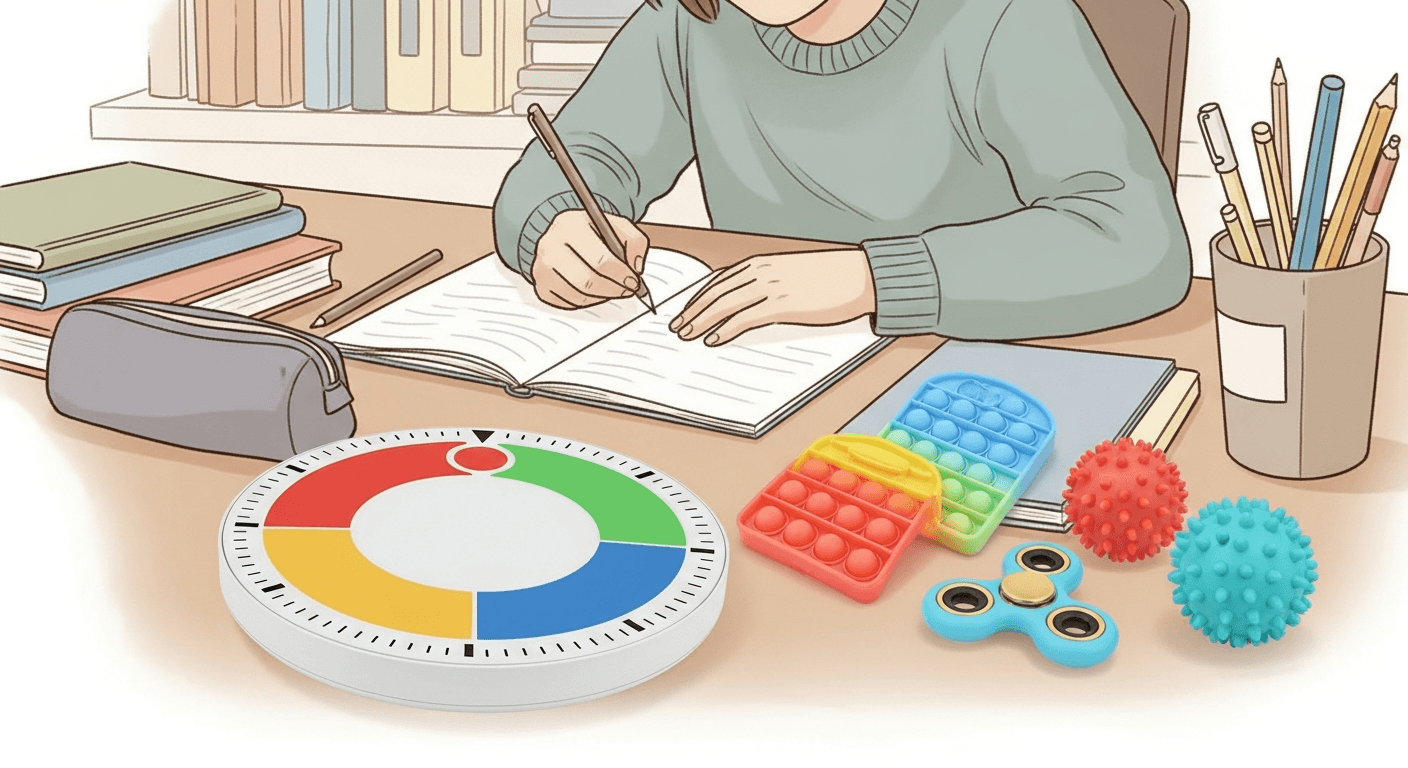
The ADHD brain struggles with self-generated motivation. External cues help: a visual timer on the desk, a checklist of tasks to check off, a parent working nearby (not helping, just present). These substitute for the internal regulation the brain isn't providing consistently.
Shorter work blocks with genuine breaks.
Work in blocks that match your child's actual attention capacity — which may be 10–15 minutes, not 30–45. Breaks should be real breaks (movement, snack, a few minutes of something enjoyable) rather than just pausing.
The Pomodoro technique (25-minute work blocks, 5-minute breaks) can work, but for some ADHD kids even 25 minutes is too long. Calibrate to the actual child, not the protocol.
Movement before and during work.
Physical activity increases dopamine and norepinephrine — the same neurotransmitters that ADHD medications target. A 10–15 minute active break before homework (not a screen break) can meaningfully improve the quality of the session that follows.
Standing desks, fidget tools, or allowing quiet movement during homework isn't indulgence — there's solid research supporting its effectiveness for ADHD.
Interest-based sequencing.
Pair a boring task with something that makes it slightly more interesting: a specific pen they like, music they enjoy, a subject they care about to start with. The ADHD brain engages through interest and novelty in ways neurotypical brains don't require.
Written, visible checklists.
Don't rely on verbal instructions. Write down the tasks, in the order they'll be done, where your child can see them. Checking items off provides the dopamine hit of completion that helps sustain motivation.
Communicating With the School
If your child has a diagnosed ADHD, they may be entitled to accommodations through a 504 plan or IEP — extended time on tests, reduced homework volume, or preferential seating. If you haven't had this conversation with the school and your child is struggling significantly, it's worth initiating.
Even without formal accommodation, teachers who understand your child's challenges can often make small adjustments that have meaningful impact.
The Framing That Matters Most
Children with ADHD receive more correction, more frustration, and more messages of "you should be able to do this" than neurotypical children. The cumulative effect on self-concept is significant.
The most protective thing you can do alongside the practical strategies is maintain an explicit, consistent message: "Your brain works differently. That doesn't mean it works worse. We're going to figure out what works for you."
That reframe — from character flaw to brain difference — changes how a child relates to their own learning for years.