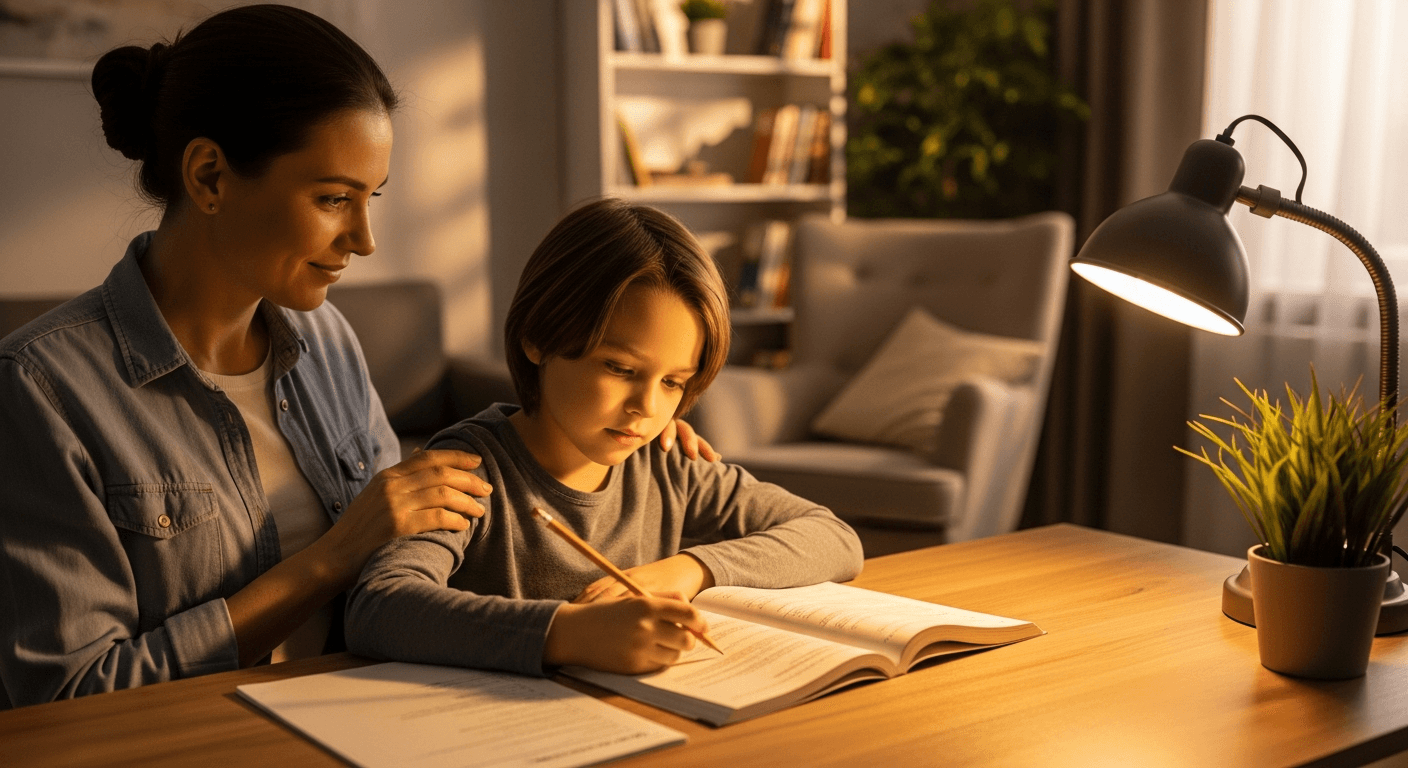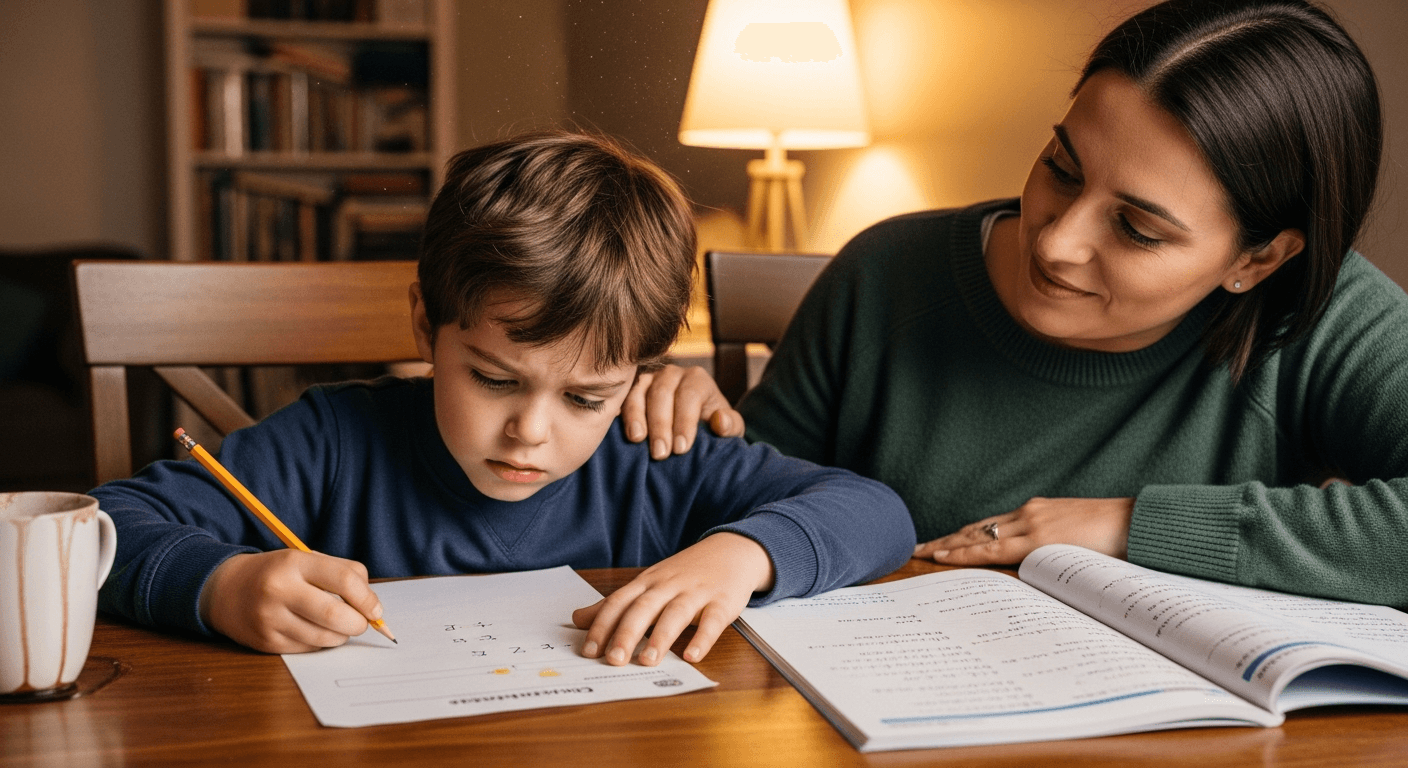
Tears, tantrums, and "I don't get it!" — why homework becomes a battlefield and the proven strategies to call a ceasefire.
If homework has become a nightly negotiation, battle, or emotional event in your house, you're not doing it wrong. You've hit a structural problem that millions of families deal with, and it has nothing to do with how much you love your child or how capable they are.
Here's what's actually happening — and what works.
Why Homework Becomes a Battlefield
The homework battle almost never starts with the homework. It starts with one of a handful of underlying causes:
Exhaustion:* By 4–6pm, many children are genuinely depleted. Asking a depleted child to produce sustained mental effort leads to emotional dysregulation, not homework.
Anxiety:* If a child is struggling with material they don't understand, sitting down to do homework means sitting down to experience failure repeatedly. Avoidance is a completely rational response to that.
Power dynamics:* The more you push, the more they resist. This is a fundamental truth of human psychology, and children are not exempt from it.
Overwhelm:* Looking at a full homework load without a clear starting point feels paralyzing, especially for kids who haven't yet developed planning skills.
De-Escalation First
When a homework battle starts, the worst thing you can do is double down on the homework. You've already lost that round. What you're doing now is de-escalating an emotional situation so that homework becomes possible again.
This might look like:
- •"Let's take a 10-minute break and come back to this."
- •"I can see this is really frustrating. What's the part that feels hardest right now?"
- •"We don't have to do all of it right now. What's the most important thing to get done?"
None of these are giving up. They're resetting the emotional state so that learning can actually happen.
The Long-Term Fixes
Make the expectation consistent, not conditional.
"Homework happens every day before dinner" is easier to enforce than "you need to do your homework tonight" because it's not a negotiation. It's just a fact of life, like dinner or bedtime.
Give appropriate autonomy.
Let them choose the order. Let them choose the location (within reason). Let them choose the background music. Autonomy within structure reduces resistance dramatically.
Separate your anxiety from theirs.
Many homework battles are fueled by parent anxiety — about grades, about the future, about whether we're doing enough. Children are excellent at absorbing parental anxiety and reflecting it back as resistance. Working on your own relationship with your child's academic performance can have a surprising effect on theirs.
Address the underlying problem.
If homework battles happen consistently around one subject, the battle isn't about motivation — it's about understanding. Getting a tutor, talking to the teacher, or spending time on the foundational concept often resolves more than any behavioral strategy.
The Thing Worth Saying
Most kids who fight homework are not lazy. They are overwhelmed, anxious, exhausted, or undertrained in the skills of self-regulation and planning. They need coaching, not conflict.
The most powerful position you can take in a homework battle is the one your child isn't expecting: calm, patient, and completely convinced they're capable of getting through it.
Not because it ends the battle immediately. But because, over time, children become what we believe them to be.