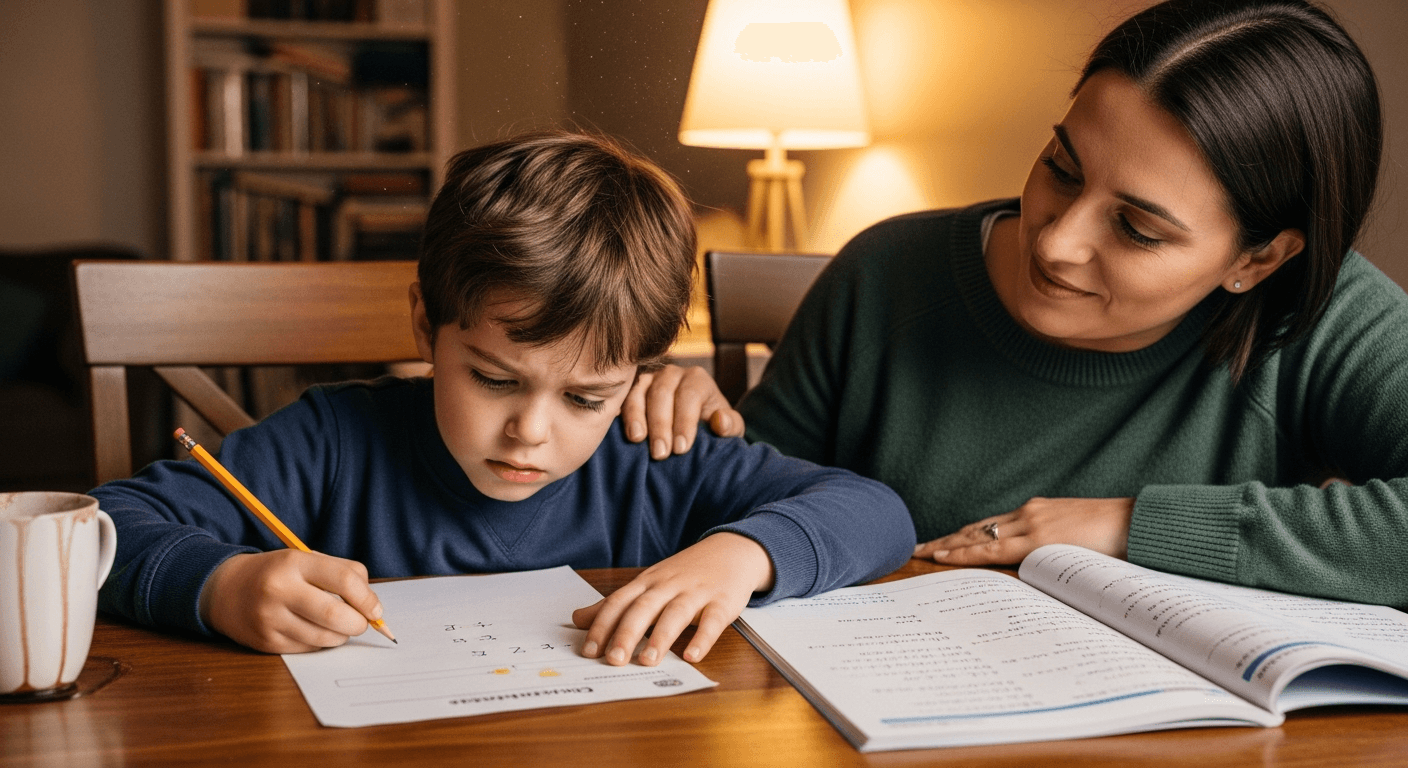
The science of habit formation applied to homework — with specific routines for elementary, middle, and high school kids.
The most common homework advice — "do it right after school!" — is wrong for most kids, oversimplified for all kids, and completely ignores everything we know about how young brains work.
Here's what the research actually says, broken down by age.
The Physiology of After-School Focus
Elementary school children (ages 6–10)* often need a substantial break after school. Their brains have been working hard for 6–7 hours — the kind of sustained attention that is genuinely taxing. The standard "snack, break, homework" model works well here: 30–45 minutes of unstructured time before sitting down.
Middle schoolers (ages 11–13)* are in a more complex phase. Their social needs intensify just as homework volume increases. Many do better with a short break (20–30 minutes) followed by homework, because putting it off entirely creates anxiety.
High schoolers (ages 14+)* often do better doing homework in two blocks: an early session for most work, and a later session to review or finish before bed. Pushing all homework to evening competes with exhaustion and the natural circadian shift that makes teens genuinely sleepier earlier than adults assume.
The Five Elements of a Routine That Sticks
1. Consistent trigger (not just a time)
"Right after my snack" is more robust than "at 4:00pm" because it adjusts to schedule changes. A trigger tied to an event is more reliable than a clock.
2. Consistent place
The brain associates environments with tasks. A dedicated homework spot — even if it's just "the kitchen table when no one is eating" — trains the switch into focus mode.
3. External distraction control
Phones off or in another room. (Not face-down on the desk — research shows the mere presence of a smartphone reduces cognitive capacity, even when not in use.)
4. A starting ritual
A short, consistent pre-homework routine (getting out all materials, writing down the task list) signals to the brain that focus time is beginning. It's the homework equivalent of stretching before a workout.
5. Defined stop time
Open-ended homework sessions cause dread. Knowing that homework ends at 7:30pm (or when it's done, whichever comes first) is motivating in a way that "until it's finished" is not.
When the Routine Breaks
Routines will break. Sports, activities, social events, illness — life interrupts. The mistake is treating a broken routine as evidence that it doesn't work.
The goal isn't a perfect routine. It's a default routine — the thing that happens automatically when nothing else is scheduled. Even if it holds 70% of the time, that's dramatically more structure than no routine at all.
The Habit Loop
Habits are built through cue → routine → reward. For homework:
- •Cue: Consistent trigger (post-snack, certain event)
- •Routine: The homework itself
- •Reward: Something genuinely appealing after completion
The reward doesn't need to be big. A specific snack, a favorite song, 15 minutes of a book they love — small, immediate rewards are more effective than delayed, larger ones. "Screen time after dinner" is too far away to reinforce the habit effectively.