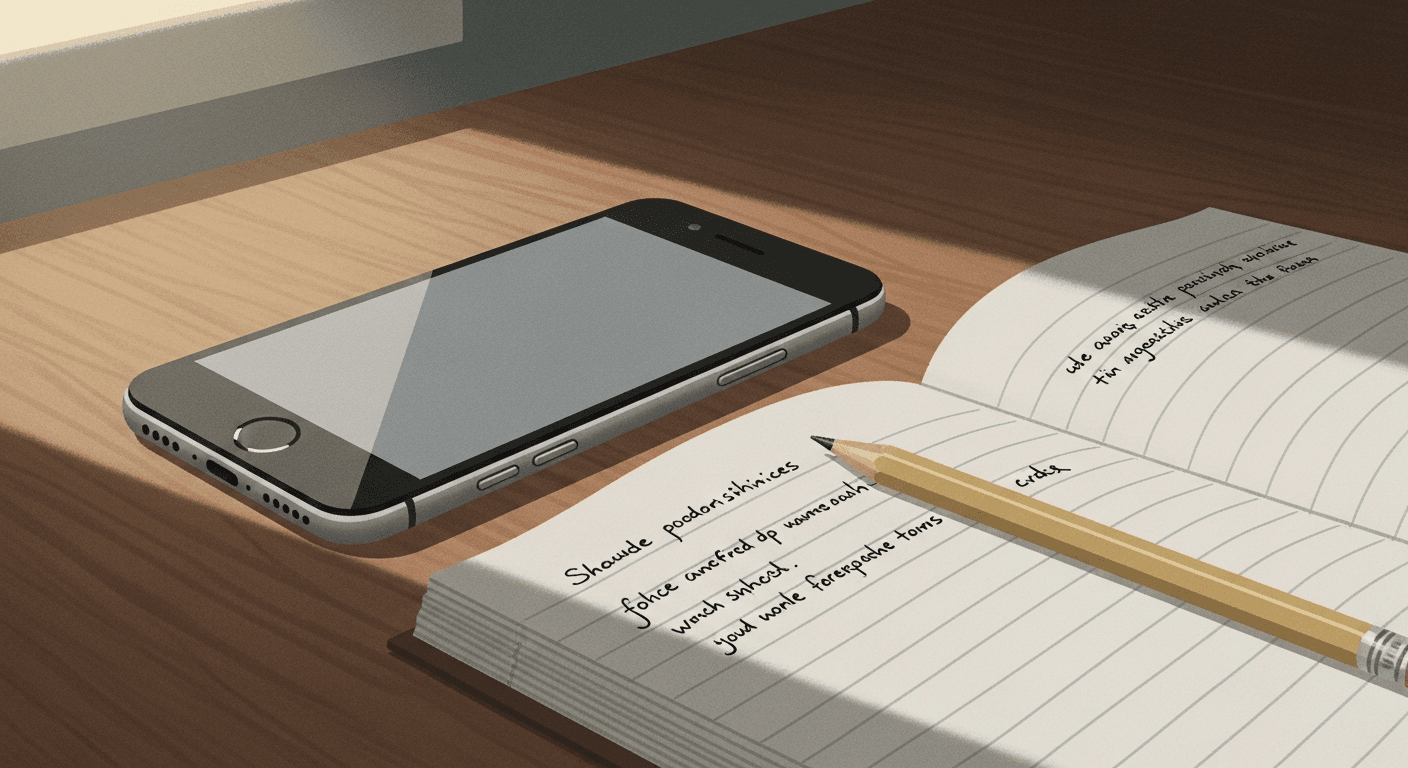
The phone isn't going away. Here's what the research says about screens and learning — and how to set rules your child will actually follow.
You have told your child to put the phone away. They have nodded. Twenty minutes later the phone is in their lap. This is not a character flaw. It's a design specification.
Smartphones are engineered by some of the most talented behavioral psychologists in the world to be as compelling as possible. The variable reward structure of notifications — sometimes interesting, sometimes not — creates the same neurological loop as a slot machine. Expecting a middle schooler to casually resist this while doing math homework is an unfair fight.
Here's what the research says, and here's what actually works.
What the Research Shows
A 2017 study from the University of Texas at Austin found that having a smartphone within reach — even face down, even silenced — measurably reduced cognitive capacity on tasks requiring sustained attention. The brain is actively suppressing the urge to check it, which uses working memory that should be going toward the homework.
A separate meta-analysis of over 100 studies on multitasking found that switching between tasks (homework and phone) doesn't just interrupt work — it reduces the quality of each subsequent return to the original task. There is a real cognitive cost to every interruption, even brief ones.
This means the question isn't really "how much phone time is okay during homework?" The answer is closer to "any active phone use during homework is costly." The enforcement problem is real, but the research is clear.
Rules That Tend to Work
Phone in another room, not face-down on the desk.
"Out of sight" is genuinely different from "in sight." The brain doesn't have to suppress the urge to check something it can't see. This single change — not airplane mode, not screen-down, but in another room — has been shown to improve performance on attention-demanding tasks.
Make this the family rule, not the child rule.
If homework time means phone-away for everyone in the household, it's a household norm rather than a punishment targeted at your child. You will have more success with this framing.
Use technology timing tools the child controls.
Apps that block distracting sites for a set period (Focus Mode on iPhone, Digital Wellbeing on Android) that the child activates themselves — rather than a parent-controlled lock — preserve some sense of autonomy. Kids who feel in control of a limit are more likely to maintain it than kids who feel controlled by it.
Allow scheduled breaks with full phone access.
"You can check your phone at the end of this assignment" is more effective than "no phone until all homework is done." Breaks with full access are more satisfying than sustained partial access (constant checking), and they create a concrete reward within reach.
The Homework-Specific Technology Problem
Some homework legitimately requires a computer, tablet, or even a phone. This is where it gets complicated.
Strategies that help:
- •Websites-only mode (blocking apps while keeping browser access for research)
- •A shared computer in a common area, rather than a private device in a bedroom
- •Clear documentation of which apps or sites are needed for the assignment — anything not on the list is off
What Doesn't Work
Lengthy screen time debates.* Relitigating the rules during homework time costs everyone energy and rarely changes behavior. The rules should be set outside homework time, with buy-in from your child, and then simply implemented.
All-or-nothing rules.* "No screens until everything is done" sounds satisfying but extends the period of temptation and resentment. Scheduled, earned breaks are more sustainable.
Relying on willpower alone.* Willpower is a limited resource. Systems that reduce the need for willpower — phone in another room, blocking apps, designated devices — work better than telling a child to simply resist.
The Conversation Worth Having
Rather than making this a rule conversation, try making it a science conversation. Show your child what the research says about phones and attention. Let them arrive at the conclusion themselves.
"Did you know that just having your phone on your desk makes your brain work harder? Here's the study."
Kids who understand the mechanism are more likely to cooperate with the solution. And they're getting a lesson in metacognition — thinking about how their own brain works — that is worth considerably more than any individual homework assignment.