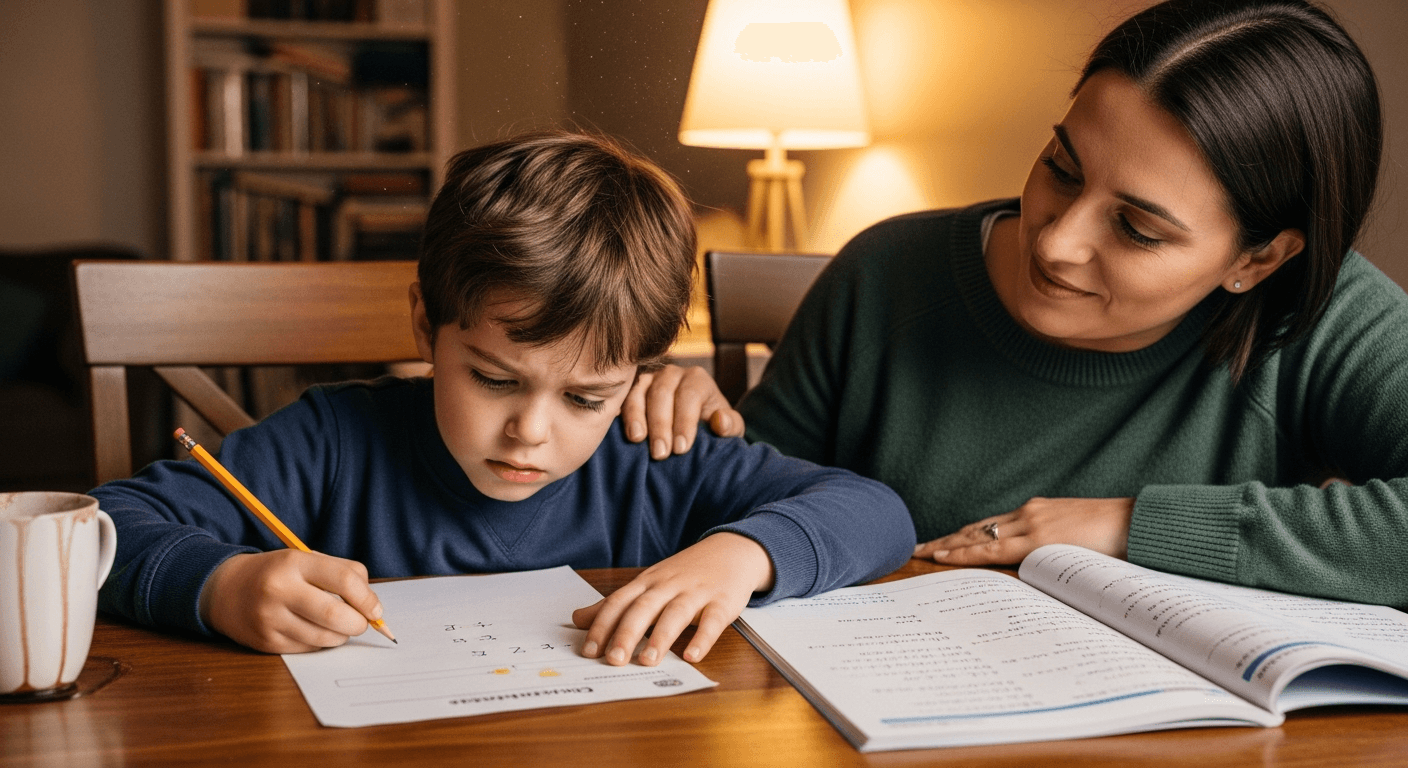
Research shows kids lose months of learning over summer break. The good news: it takes surprisingly little to prevent it.
Every fall, teachers spend weeks re-teaching content from the previous spring. This is not because kids are forgetful. It's because learning — without any reinforcement over 10–12 weeks — naturally fades. Researchers call it "summer learning loss," and the data on it is remarkably consistent.
On average, students lose about one to three months of academic progress over summer break. Math skills are particularly vulnerable, followed by reading. The losses compound over years — by middle school, the cumulative effect of summer slide is one of the strongest predictors of the gap between struggling and thriving students.
Here's what's important: it doesn't take much to prevent it. You are not being asked to run a summer school. You're being asked to keep the brain engaged.
Why Summer Loss Happens
Learning is physical. Literally — memories are stored as physical connections between neurons, and connections that aren't used weaken over time. This is why you can forget a foreign language you once spoke if you stop using it, and why riding a bike feels rusty after a winter of not doing it.
Academic skills are no different. Skills that aren't practiced over summer break don't disappear, but they require effort to get back up to speed. And because the fall semester starts with new content rather than review, students who've slid have to split their attention between catching up and keeping up — a losing position.
What the Research Says Works
The good news is that the dose required to prevent summer slide is genuinely small. Research suggests that as little as 5–6 weeks of low-intensity reading practice is enough to prevent reading loss for most students. For math, even occasional practice (a few times per week) significantly reduces regression.
This is not a heavy lift. The key is consistency over intensity.
Practical Approaches That Don't Feel Like School
Reading is the foundation.
Any reading counts — books your child chooses, audiobooks, graphic novels, magazines about their interests. The research on summer reading doesn't specify genre or level. It just needs to happen.
Set a 20-minute reading habit somewhere in the day. Morning works well because it doesn't compete with the social plans and outdoor time that make summer feel like summer.
Math needs active recall, not passive review.
Reading a math textbook over the summer doesn't work. Working a few problems does. Apps, workbooks, or even mental math games during car rides (estimation games, multiplication challenges) are all effective.
15 minutes of actual problem-solving three times a week is enough to significantly reduce math slide.
Writing is often overlooked.
Keeping a casual journal — even a few sentences about what they did or thought about that day — maintains writing skills. It doesn't need to be formal. The goal is keeping the mechanics of translating thought into words practiced.
Real-world learning is underrated.
Cooking involves fractions and measurement. Building a birdhouse involves geometry and planning. Road trips involve time, distance, and estimation. Summer is full of natural learning opportunities that don't require worksheets.
What Doesn't Work
Buying a big workbook and expecting a child to work through it over summer rarely works. Without structure and accountability, it sits on a shelf. If you go the workbook route, make it a shared activity with clear expectations — not a solo assignment.
Threatening academic consequences ("You'll be behind in the fall!") is anxiety-producing without being motivating. Kids who are worried about being behind often shut down rather than engage.
A Simple Summer Plan
- •20 minutes of reading, daily.
- •15 minutes of math practice, three times a week.
- •Some kind of project that involves writing — a journal, a recipe book, a story.
That's 25–35 minutes on practice days. The rest of summer is still summer.
The point isn't to eliminate the break — breaks are genuinely important for wellbeing and creativity. The point is to maintain the neural infrastructure so that fall feels like continuing rather than restarting.